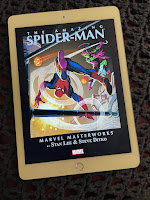
If anyone needs me, I'll be reading. Please don't need me.

If anyone needs me, I'll be reading. Please don't need me.

Thursday, May 12, 2011

Soothing shot of Jack


Thanks to my iPad, I'm catching up on a lot of good TV that I missed over the years for various reasons (life's busy, you know?). Right now, for example, I'm using my iPad's Netflix app to watch one season after another of 24, the Kiefer Sutherland anti-terrorism drama that recently concluded after eight successful seasons on the Fox network. It's a good show, consistently delivering the flavor of the type of high-octane, fast-paced espionage thriller that we guys often like to read on the beach or by the pool every summer. This is especially true because each 24-episode season delivers one big 24-chapter story.

One thing I'm noticing, though, now that we're in the days following the happy destruction of Osama bin Laden, is that the prime fuel powering 24 seemed to be our country's anger and frustration at bin Laden's elusive nature in the years following 9/11. And we were probably more frustrated that we thought we were, as for eight years Americans made a huge hit out of a show that, like clockwork, conceived terrorist characters as bad or worse as bin Laden, which- not surprisingly- Sutherland's Jack Bauer character would locate and satisfyingly vanquish by the end of each season... with a few lesser terrorists being taken out as appetizers in the events leading up to each season's big close. Hey, if you can't have the real thing, fantasy is a good temporary substitute, right?

It got me thinking. Would 24 have been a successful if Osama bin Laden had been found and killed sometime during the immediate months following 9/11, and America was no longer quite so thirsty for vengeance and/or justice? Wasn't America's continuing head-banging frustration about this guy running around free a big part of the reason so many of us tuned in to watch fictional bin Laden stand-ins get blown away on 24 year after year?

Heck, I'm still enjoying watching terrorists bite the dust on 24, more than a week after our Navy SEALS gave America some closure for 9/11. Imagine how satisfying those same 24 episodes felt in 2003, 2004, etc., when they originally aired?

Good military mystery


Hard Rain, the third book in David Rollins' Vin Cooper series, was the first Rollins book I ever read, and it was pretty enjoyable. I particularly liked the conflicting aspects of Vin Cooper's personality. You see, Cooper is a longtime member of the U.S. Air Force, making him one tough, pro-military guy. But he works as an Internal Affairs officer in the Air Force, so he's also well aware, via his many investigations, that military personnel don't always do the right thing. Thus, the patriotic and cynical sides of Cooper's personality, often at odds with one another, make for interesting reading.

The main story here concerns the investigation by Cooper and his fellow investigator (and ex-significant other) Anna Masters into the apparent serial killing of the U.S. military attache to Turkey, who's found cut up into little pieces. The facts soon suggest, however, that there might be more to the attache's death than him simply being the victim of a bizarre ritualistic killer, especially when subsequent deaths occur involving other figures in the attache's sphere of influence.

Things move along nicely, with the investigation being supported by some good action, as well as a couple of spicy subplots involving a new romance for Vin and Vin's annoyance at Anna's new love, who Vin thinks is a creep. Also keeping things engaging is Vin's sarcastic attitude about just about everything (especially lawyers), and the frequent and pretty funny jokes he tells (again, especially about lawyers). Finally, there's also a related plotline, compelling yet sad, about yet another way the U.S. government is perhaps not properly protecting and caring for U.S. service people serving or recently home from Iraq and Afghanistan.

While it's probably better to read the initial two books in this series first, one can dive into Hard Rain cold without any problem, as I did. Be warned, though: although the main story is resolved at the end, there's a doozy of a cliffhanger involving Vin and Anna that will quickly make you crave the next book in the series.

Hard Rain is available on Kindle for $7.99.

Wednesday, May 11, 2011

Of gods and men


I saw the movie Thor this past weekend, and really enjoyed it. It had well-drawn characters, good action, and imaginative production design. I also liked the way that it was sit-up-and-take-notice epic yet also surprisingly intimate. The characters genuinely mattered here, which always makes a summer blockbuster better. With the big summer movies, it's not all about the special effects, and never has been.

One thing made me smile, though. In the old Thor comics, which debuted in the early 1960's, Marvel's story conceit was that, hey, you know what-- Thor, Loki, and all the other mythical Norse gods were actually real, and here are new stories about them! And the comic book took off, still being published to this day. To my knowledge, no one at Marvel worried, at least with any fervor, that certain groups of people (like Catholics, southern Baptists, devout Jews etc.) might be offended by the notion that the Judeo-Christian God was apparenly being rejected, by a kid's comic book no less, as the only true God out there.

Oh, one thing Marvel did eventually do was insert a scene like this into the comic book every fifty or sixty issues or so:

Catholic priest: Thor, thank you for rescuing all our students from their burning school. You're a true hero, even though your very existence flies in the face of the Christian beliefs I hold so dear in my heart!

Thor: Verily, thou should not allow thy heart to be troubled, good Father! Thor and his compatriots in noble Asgard have never claimed to be the ultimate forces in the universe. The noble idea of your own Christian God watching us all from above is one that indeeds comforts the denizens of Asgard.

Catholic priest: (walking away, faith restored) God bless you, Thor!

So, you see? At least Marvel threw a small bone to traditional religion by noting that even though the Norse gods were real in Marvel's comic book universe, they didn't claim ultimate supremacy. And that seemed to placate the occasional Marvel editor who presumably was concerned about some kind of backlash from traditional religious quarters, a backlash that never really occured as far as I know.

So, what made me smile in the movie? It seems, almost fifty years after Thor's debut in the comics, now there was some genuine worry about offending people with the notion of pagan gods being presented as real, or at least as wholesome movie heroes. The movie, you see, goes out of its way to convert the comic book's mystical, magical realm of Asgard, the home of Thor and the Norse gods, into a realm of technological, scientific wonderment, with Thor and his compatriots being presented as simply noble, scientifically advanced, long-lived beings from another world who were only perceived as gods when they visited the ancient Norsemen on Earth centuries ago.

I mean, it all still works in the movie, and in some ways things are more interesting than they were in the comic book. For example, in the original comics, Bifrost, the majestic Rainbow Bridge that connects Asgard to the physical universe, was just that: a rainbow. Epic, but kind of bland. In the movie, the rainbow bridge is a mightly engineering achievement, crackling with powerful electricity under its ever-churning rainbow coloration, and which connects to a sharp-looking, golden transport chamber, which can shoot Thor and his fellow warriors to any point in the universe. Much more fun.

But, yeah, it made me smile that it was probably Hollywood cynicism and fear that for once resulted in better, more interesting story and production elements in the final film. That's not something you see every day.

Anyway, Thor is worth a trip to the movies. Its epic grandeur and entertaining, charismatic characters are definitely worth catching on the big screen.

Thursday, May 5, 2011

The game begins


While a big reason I recently signed up for HBO and Showtime was because I wanted to watch The Borgias on the latter channel, the primary reason was because I wanted to be there on the ground floor when Game of Thrones got underway on HBO. Now, three episodes into the series, I'm patting myself on the back for coming up with and implementing a very good plan.

Sticking close to the novels in George R.R. Martin's immersive Song of Ice and Fire series (four books strong so far), Game of Thrones draws you into its world of political (and often literal) backstabbing, diverse cultures, terrific characters, and epic storytelling. And, to be clear, said story is suspenseful, involving, and thoroughly unpredictable. No one is safe, which is both a sad and dramatically terrific aspect of the show (at least, if it keeps sticking to the plot points of the books).

You don't have to be a fantasy fan to enjoy this series. While things like magic, dragons, and supernatural monsters eventually come into play, it'll be a while before they're a sizable part of the proceedings. And even then they always take a back seat to the human interactions. No, the show mainly feels like an alternate, fictional past of our own human history.

Game of Thrones airs on Sundays at 9:00 p.m. Eastern on HBO, with easy access to all the previous episodes available at HBO On Demand. While I'm enjoying The Borgias on Showtime, I'm really enjoying Game of Thrones on HBO. Why not give it a try and see if you feel the same way?

Wednesday, May 4, 2011

More to ponder...


On this fine Wednesday, here are more eternal questions to ponder...

When you go to the drugstore, why are the condoms not in the same aisle as the rest of the party supplies?

Why do you need a driver's license to buy liquor, when it's against the law to drink and drive?

When you choke a smurf, what color does it turn?

Naughty pope, good show.


I don't know if it's good history (probably not), but Showtime's The Borgias has been a cracking good period drama. Each hour is generously filled with sex, violence, intrigue, and nicely complicated characters who you don't like much in one scene but then feel bad for in the next. And the CGI used to create 15th-century Italy is very good: subtle and artful and virtually never reminding you that you aren't seeing real buildings and actual views out castle windows.

Previously, I enjoyed The Tudors, which was produced by many of the same creative people behind The Borgias, but The Borgias has so far done a better job in generating stories from the same heady swirl of truth and imagination presented by the previous show, along with offering better production values. Definitely give this one a whirl if you're at all curious. It's quite easy to catch up on the initial episodes; they're all available on Showtime On Demand. New episodes air on Showtime every Sunday evening at 10:00 p.m.

I experienced The Tudors on DVD, but signed up for Showtime so I could do exactly that: watch The Borgias as each new episode aired. A happy bonus was a generous sign-up deal from my cable provider: six months of Showtime for only $10.00 per month. Actually, I signed up for both HBO and Showtime for the $10.00-each-per-month deal. Maybe your cable provider is currently offering the same deal, too.

Oh, why did I also want HBO? You'll have to wait for tomorrow's cable tip to find out!

Tuesday, May 3, 2011

Kinsey's on the job


While I admired the confidence of the first two entries in Sue Grafton's Kinsey Millhone series, in that they stayed laser pointed at their respective mystery plots with little diversion by banter and personal subplots, the wider scope of C is for Corpse turned out to provide a great ride, too.

Here we get two ongoing plots: the primary story involving Kinsey helping a client figure out why someone might want him dead (complicated by the fact that the client soon is dead), and a secondary story involving Kinsey's landlord Henry Pitts possibly being targeted in a financial scam. Kinsey bounces between the cases, with both nicely entertaining us with suspense and puzzling questions. I especially liked how the landlord plot, which essentially doesn't threaten Kinsey with any physical danger, generates just as much suspense as the main storyline, which does.

The main story, by the way, features several reliable mystery novel stand-bys: a client with memory problems, a gothic mansion filled with the idle rich, and lots of family secrets. Grafton does a good job with all this, then tops it all off with a little humor. A favorite running gag has Kinsey continually lamenting the fact that all the spectacular wine she's enjoying in her client's mansion (served to her by liveried staff, no less) is going to ruin her ability to enjoy the cheap, boxed stuff she's used to swilling.

I'm glad I'm finally discovering this series, after years of dismissing it because it seemed to be the type of series only my mom and my girlfriends enjoyed. But, no, these aren't frothy, souffle-like beach reads at all (I know, I know-- I shouldn't characterize women as liking only light reads). Anyway, while easy to get into, each entry so far has offered a tough little tale, challenging plotting, and thoughtful, biting humor. C is for Corpse is no exception.

I'm glad there are still many, many more Kinsey Millhone books left for me to enjoy.

C is for Corpse is available for $7.99 on Kindle.